
After a slip or trip accident, get medical attention if you’re hurt, report the incident to whoever is responsible for the location, note down what happened while it’s fresh in your mind, and photograph the hazard and your injuries before it’s cleared away or changes. These steps protect your health first and preserve the evidence that matters if you later decide to look into a compensation claim.
Slips and trips can happen almost anywhere: a supermarket aisle, a pothole on the pavement, a poorly lit staircase, or a loose carpet edge in a workplace. Most are minor and cause nothing more than embarrassment. Some, however, result in fractures, sprains, head injuries or long recovery times. Knowing what to do in the first hour, and the first few days, can make a real difference to your recovery and to any claim you might want to pursue later.
Step One: Deal With Your Injury First
Your health comes before anything else. If you’re in pain, feel dizzy, or have hit your head, seek medical attention promptly, whether that’s a GP, minor injuries unit or A&E depending on how serious it feels. Even if an injury seems minor at the time, some soft tissue injuries and concussions take a day or two to show their full effect, so it’s sensible to get checked over rather than assume you’re fine.
A medical record also matters later. If a claim ever becomes relevant, having a documented visit close to the date of the accident is far more useful than relying on memory months down the line.
Step Two: Report the Accident
Wherever the accident happened, whether that’s a shop, a council-maintained pavement, a workplace or a private property, report it to whoever is responsible for that location as soon as you reasonably can. Ask for the incident to be logged in an accident book if one exists, or request written confirmation by email if not. Get the name of the person you spoke to and the date and time of the report.
This step is often overlooked, but a contemporaneous report is one of the strongest pieces of evidence in any later discussion about what happened and where.
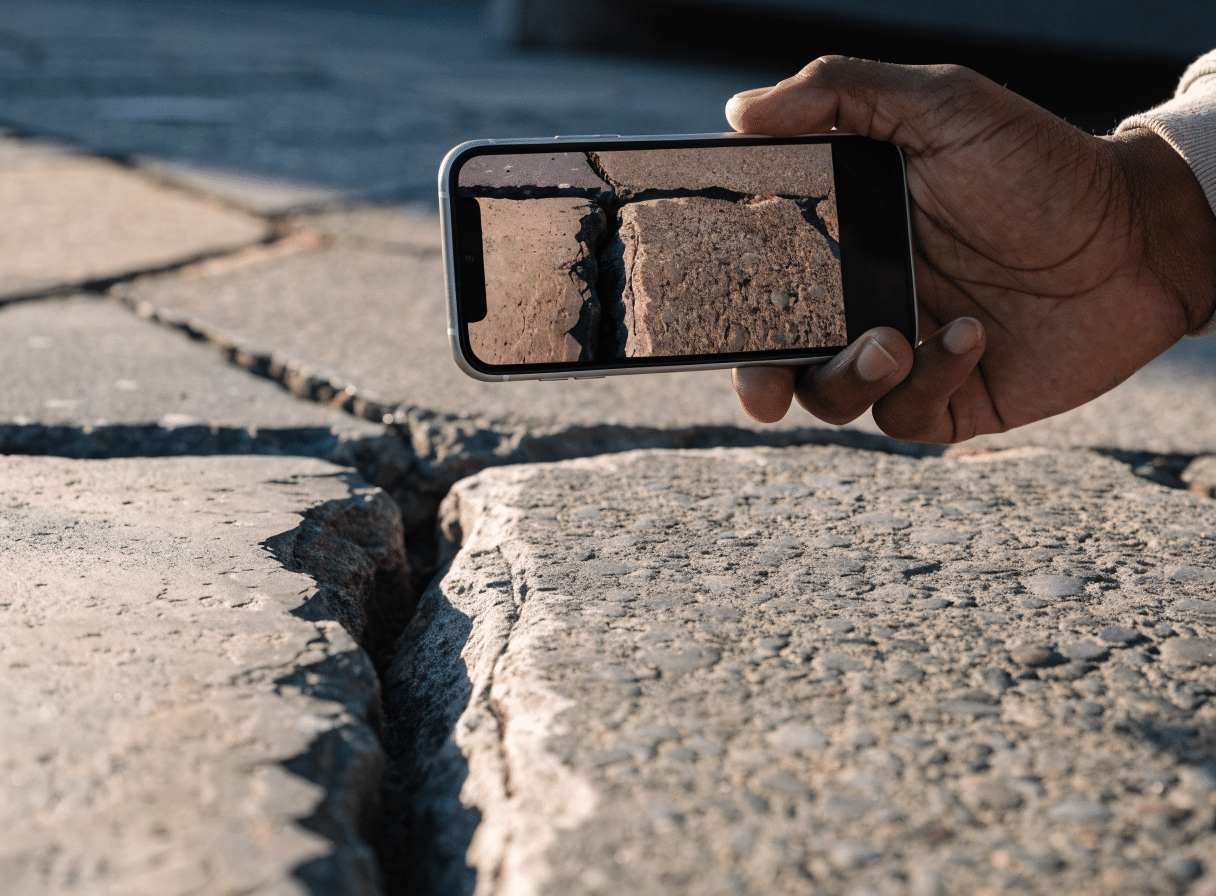
Step Three: Gather Evidence While You Can
Hazards get cleared, spillages get mopped up, and broken paving slabs sometimes get repaired within days. If you’re able to, before the scene changes:
- Take photographs of the hazard itself (the wet floor, the uneven surface, the missing handrail)
- Photograph your visible injuries
- Note the exact location, date and time
- Get contact details for anyone who witnessed the fall
- Keep any damaged clothing or footwear
If you can’t do this yourself because of your injuries, ask someone with you to do it, or go back as soon as you’re able.
Step Four: Keep a Record of the Impact
It helps to keep a simple written record of how the accident has affected you day to day: time off work, appointments attended, medication taken, and how the injury has limited your normal activities. This doesn’t need to be formal, just consistent, and it becomes useful if you later want to understand the full picture of how the accident has affected your life.
When a Slip or Trip Might Be Someone Else’s Responsibility
Not every fall is anyone’s fault. Occupiers of premises, whether a business, a landlord or a local authority, have a general duty to keep areas reasonably safe, but that doesn’t mean every uneven surface or spill automatically means someone was negligent. Whether a claim is worth pursuing usually depends on things like how long a hazard had been there, whether it was signposted, and whether reasonable steps had been taken to prevent it.
| Situation | Who may be responsible | What to check |
|---|---|---|
| Wet floor in a shop with no warning sign | Retailer or occupier | Was the spill recent, was it signposted |
| Broken pavement slab | Local council or highway authority | How long had the defect existed |
| Loose carpet or trailing cable at work | Employer | Was it a known or reported hazard |
| Poorly lit stairwell in a rented property | Landlord | Was lighting maintained as required |
| Fall caused by another person’s deliberate act | Different legal route, such as a criminal injuries claim | Was the incident reported to police |
If your fall was the result of someone else’s deliberate act rather than a hazard, such as being pushed, that’s usually treated differently and may fall under cica compensation rather than a standard occupier’s liability claim.
Getting Advice
If you’re unsure whether your slip or trip accident is worth looking into further, speaking to expert slip trip solicitors can help you understand where you stand, without any obligation to take things further. The same team can also advise on other types of accidents under the wider personal injury service if your circumstances don’t fit neatly into a slip or trip.
Do I need to report a slip or trip accident straight away?
It’s best to report it as soon as you reasonably can, ideally on the same day, so the details are accurate and the hazard can potentially be inspected while it still exists.
What if I didn’t take photos at the time?
Go back as soon as you’re able and photograph the area if the hazard is still there, and try to identify anyone who saw what happened. It’s not ideal, but it’s not the end of the road either.
How long do I have to make a claim after a slip or trip accident?
There are time limits that apply to personal injury claims in England and Wales, so it’s worth seeking advice sooner rather than later if you think you might want to pursue one.
What if the accident happened at work?
Employers have responsibilities around workplace safety. Report it through your usual workplace accident reporting process and keep your own note of what happened in case it’s needed later.
Is it worth getting advice even for a minor injury?
It can be, particularly if you’re unsure whether the injury will fully resolve or whether the hazard was something that should have been dealt with. A brief conversation can clarify whether it’s worth taking further.
In Summary
A slip or trip accident can feel like a minor, forgettable moment, until the injury or the disruption it causes turns out to be more significant than expected. Looking after your health first, reporting the incident properly, and gathering evidence while it’s still available puts you in the strongest position, whatever you decide to do next. If you’re in or around Accrington and want to talk through what happened, get in touch with Abbey Court Solicitors for a straightforward conversation about your options.