
There is no fixed legal timetable for conveyancing in England and Wales. A straightforward, chain-free purchase with a responsive lender can complete within a matter of weeks, while a sale and purchase sitting in a long chain can take several months. The honest answer to “how long does conveyancing take” is that it depends on four things above all: the chain, the searches, the mortgage and the complexity of the title. This guide walks through each stage of the conveyancing timeline, explains where delays usually come from, and shows what you can do to keep your own transaction moving.
This article is general information, not legal advice. For guidance on your own sale or purchase, speak to a solicitor.

The short answer
Conveyancing runs from the point your offer is accepted (or you accept an offer) to the day of completion, when money and keys change hands. The process itself is the same for almost every residential transaction; what varies is how quickly each stage can be cleared. Cash purchases with no chain move fastest. Leasehold purchases, long chains and slow search results sit at the other end of the scale. A good conveyancer cannot control every party in the transaction, but they can make sure your side is never the one holding things up.
The conveyancing timeline, stage by stage
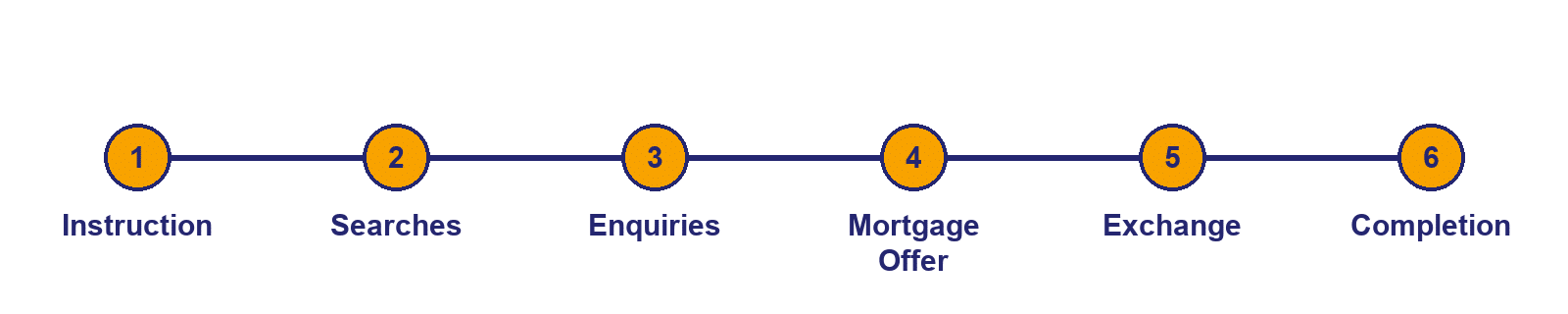
- Instruction and onboarding. Once your offer is accepted, you formally instruct a conveyancing solicitor. Identity checks, source-of-funds checks and initial paperwork happen here. Returning your forms promptly at this stage saves time later.
- Draft contracts and searches. The seller’s solicitor issues the draft contract pack. The buyer’s solicitor then orders property searches, typically a local authority search, drainage and water search, and an environmental search. Search turnaround varies between councils, so this stage is one of the least predictable in the whole timeline.
- Enquiries. The buyer’s solicitor raises enquiries about anything the contract pack or searches throw up: boundaries, alterations, guarantees, rights of way. Each round of enquiries needs an answer from the seller’s side, so several rounds can add weeks.
- Mortgage offer and report. If you are buying with a mortgage, your lender needs to issue a formal mortgage offer, usually after its own valuation. Your solicitor then reports to you on the title, the searches and the contract, and you sign the paperwork.
- Exchange of contracts. Once every party in the chain is ready, contracts are exchanged and the deal becomes legally binding, with a completion date fixed. Until exchange, either side can still walk away.
- Completion. On the agreed date, the purchase money is transferred, the seller moves out and you collect the keys.
- Post-completion. Your solicitor deals with any Stamp Duty Land Tax return and registers your ownership with HM Land Registry. Registration happens after you have moved in, so it does not delay your move. HM Land Registry publishes its current processing times on GOV.UK, and applications to change an existing register entry are typically dealt with far more quickly than applications to create a brand-new title (HM Land Registry: processing times, GOV.UK).
What slows conveyancing down
- The chain. Every linked sale and purchase has to be ready before anyone can exchange. The longer the chain, the more likely one link delays the rest.
- Search turnaround. Some local authorities return searches quickly; others take considerably longer. Your solicitor can order searches early to soften the impact.
- Leasehold title. Flats and other leasehold properties involve a management pack from the freeholder or managing agent, plus extra enquiries about service charges and the lease itself.
- Mortgage delays. A slow valuation or extra lender requirements can hold up the mortgage offer.
- Missing paperwork. Unsigned forms, missing guarantees or unresolved building-regulation questions all trigger further enquiries.
- Probate and matrimonial sales. Where a property is sold following a death or as part of a divorce settlement, additional legal steps may need to complete first.
How to keep your transaction moving
You cannot control the whole chain, but you can make sure your own side is quick. Instruct a solicitor as soon as your offer is accepted rather than waiting weeks. Return forms and identity documents promptly. If you need a mortgage, get your application moving immediately. Respond to your solicitor’s questions the day they arrive where you can. And choose a conveyancer who communicates: chasing the other side regularly is a real part of the job. Our conveyancing solicitors in Accrington act for buyers and sellers across Lancashire and keep clients updated at every stage, and our fee structure is set out openly on our fees page.
It is also worth budgeting realistically before you start. Costs beyond the headline legal fee catch many buyers out, and we have covered these separately in our guide to hidden costs in UK conveyancing.

FAQ
How long does conveyancing take with no chain?
Chain-free transactions are the quickest kind. With searches back promptly and a mortgage offer in place (or a cash purchase), a chain-free purchase can complete within a matter of weeks rather than months.
Why is my conveyancing taking so long?
The most common causes are a slow link elsewhere in the chain, outstanding search results, unanswered enquiries or a delayed mortgage offer. Ask your solicitor which specific item is outstanding; there is usually one identifiable blocker.
Can I speed up conveyancing?
You can speed up your own side: instruct early, return paperwork quickly, progress your mortgage application immediately and answer queries the same day. You cannot force other parties in the chain to move faster.
Does exchange of contracts mean the sale is done?
Exchange makes the contract legally binding and fixes the completion date, but the transaction finishes on completion day, when the money is transferred and you get the keys.
Does Land Registry registration delay moving in?
No. Registration happens after completion, so you move in on completion day regardless. Current registration timescales are published by HM Land Registry on GOV.UK.
Talk to a local conveyancing team
Every transaction has its own timeline, and the best way to get a realistic estimate for yours is to talk it through before you commit. Abbey Court Solicitors handles residential buying and selling for clients in Accrington, Blackburn, Burnley and across Lancashire. If you are planning a move, contact us for a clear explanation of the process and what it will involve for your property.